Battersea splits cleanly into two worlds. North along the river, around Nine Elms, the Power Station development and the Battersea Reach towers, you have new-build flats with structured Cat6 in the walls, FTTP at the riser and shared concierge networks. Inland, between Battersea Park and Clapham Junction, you have Edwardian and late-Victorian terraces with original twisted-pair, master sockets in odd places and bell-wire extensions threaded through every room. I work across both, and the first thing I do on any call is establish which one I am walking into.
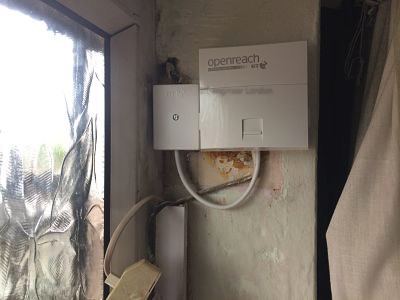
I am an ex-BT engineer and Battersea has been part of my regular round since 2011 — Queenstown Road and Battersea Park Road, the streets around Lavender Hill and Clapham Junction, the Northcote Road area, and the riverside developments from Nine Elms east towards Vauxhall. The new-build calls and the terrace calls need very different test gear and very different mindsets. The new-builds need patience with building management, an understanding of structured cabling, and the right adaptors for whatever the developer fitted as a master termination. The terraces need a buttinski, a tone tracer, an NTE5C in the van, and willingness to lift a floorboard.
The Nine Elms riverside — Power Station, Embassy Gardens, the new towers
The strip of river from Vauxhall down to Battersea Park has been transformed since about 2015 — the Power Station development itself, Embassy Gardens (with the sky pool), the One Thames City phase, Battersea Reach further upriver. Most of these flats are wired with a Cat6 backbone from a building-wide comms room, FTTP fibres up the risers, and a small distribution point inside each flat — typically in a kitchen utility cupboard or hallway. The router socket is on one wall, the TV socket is on another, and the resident has no idea how the two are joined together.
I had a call from a flat in one of the Embassy Gardens blocks where the owner was paying for a 1 Gbit Hyperoptic service and getting around 250 Mbit at the router. The flat had two Cat6 wall sockets — one in the lounge, one in the master bedroom — and the router was sitting in the lounge. When I tested the two sockets with my Fluke certifier, the lounge run came back as Cat5e installed by the previous owner during a refurb, not the original Cat6 the developer had fitted. We swapped the patch back at the distribution panel, moved the router to the bedroom socket which was on the original developer-fitted Cat6, and the speed went to 940 Mbit. Job done in under ninety minutes, but it needed someone with a certifier to identify which run was the bottleneck. That sort of detective work is the Nine Elms norm.
Battersea Park and the Prince of Wales Drive terraces
Around Battersea Park itself — Prince of Wales Drive, Albert Bridge Road, the streets running south into the park's residential edge — the housing is mostly late-Victorian mansion blocks and Edwardian terraces. The mansion blocks tend to have an old shared lead-in into a basement cupboard and a single twisted pair running up the riser to each flat. When FTTP arrives, the Openreach engineer has to negotiate that riser and the building management before they can drop a fibre, and the result is often less than ideal.
I did a job in a mansion flat off Prince of Wales Drive where the FTTP install had landed the ONT in the entrance hallway because that was where the riser came out. The router was supposed to live in the study at the back, twelve metres away through three walls, and WiFi from the hallway position simply did not reach. I ran a single Cat6 along the hallway picture rail (in a slim, painted-to-match conduit that the owner agreed to), drilled neatly through the dividing wall into the study, and gave them a wall-mounted 802.11ax AP that covered the whole flat. Fluke certified, signed off, finished in an afternoon. The owner had been told by their ISP that they would need a mesh system — they did not, they needed a single hardwired AP placed in the right room.
Clapham Junction and the Northcote Road area
South of the railway, in the streets between Clapham Junction station and Wandsworth Common — Northcote Road, Bolingbroke Grove, Webbs Road, Bramfield Road, the streets around the Honeywell triangle — you are in classic family-Victorian-terrace Battersea. These are the houses that took the original BT lead-in in the 1970s or 80s, had it extended in the 90s for a fax line, had ADSL fitted in the early 2000s, took VDSL around 2014, and have now mostly been upgraded to FTTP in the last two years. Each of those moments left wiring behind.
A typical Clapham Junction job: a family on a street off Northcote Road had had a new FTTP install, the ONT had been screwed up next to their old NTE5A in the under-stairs cupboard, and the original NTE5A was still feeding three working extensions around the house. Their landline had gone dead at the same time as the FTTP went in — which the customer assumed was the install engineer's mistake, but was actually the migration to digital voice that should have been planned. I sorted them out: kept the NTE5A in place but disconnected from the active line (the customer wanted to keep the wall sockets for cosmetic reasons), set up their digital voice on a phone plugged into the back of the router, and added a single Cat6 run from the under-stairs cupboard into the front room where the family wanted their main phone. The whole thing took two hours and the customer was happier than they had been with the original Openreach visit.
What I cover across Battersea, SW8 and SW11
The Battersea workload across new-build and terrace looks like this:
- Master socket installs, moves and upgrades — usually NTE5C replacing older NTE5A or BT76 units, with integrated VDSL or G.fast filtering.
- FTTP ONT relocations and Cat6 extensions — moving the router position away from where the Openreach engineer left the ONT.
- Digital voice migration help — getting the old landline working on the back of the router after a copper-to-fibre migration.
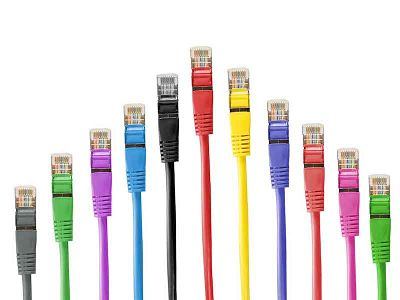
- Cat5e and Cat6 structured cabling for home offices, garden offices, hardwired ethernet to desks, gaming PCs and IPTV boxes.
- Noisy line diagnosis and bell-wire removal on the older terraces — usually the single biggest improvement to a marginal VDSL line.
- WiFi 6 / 802.11ax access points placed by survey, PoE-powered, ceiling-mounted, properly tuned for the building.
- Small-office cabling for the businesses along Lavender Hill, Battersea Park Road and the converted commercial spaces around Battersea Square.
- Fluke certifier reports for every data run, kept on file for the customer.
New-build leaseholders — what your building does and does not cover
One thing I want to be clear about for Nine Elms and Battersea riverside leaseholders: your building's FM team or concierge will look after the shared infrastructure up to the point it enters your flat. Beyond that — the patches inside your distribution panel, your router position, your internal cabling, your WiFi coverage — is your responsibility, and most building management contracts explicitly say so. That is the gap I fill. I can also coordinate with the building's facilities team if access to a riser or comms cupboard on your floor is needed.
A common mistake is for new residents to assume the developer fitted everything they need. Often they have — but only at the developer-spec level, which is fine for the first occupant but rarely tuned for the actual use case. A family of five working and schooling from home in a three-bedroom new-build needs WiFi that reaches every room, and that is rarely what the developer's single in-flat AP delivers.
What to know before you ring
Useful things to have ready when you call about a Battersea job:
- Your provider — BT, Sky, Vodafone, TalkTalk, Hyperoptic, Community Fibre, Cityfibre via a reseller, or one of the new-build's bundled deals.
- Your building type — new-build tower, mansion block, Victorian or Edwardian terrace, converted commercial.
- Whether you have an ONT (small white box with LEDs) for FTTP, or a traditional single phone socket for copper-based service.
- What is actually wrong — phone line, broadband speed, WiFi coverage, hardwired connection.
- Whether you have tried plugging the router directly into the master socket or ONT and bypassing extensions.
If you are in SW8, SW11, SW18 or the edges of SW4 and the line, network or WiFi is misbehaving, give me a ring. Five minutes on the phone usually tells me whether it is something I need to come and look at, or something we can talk through.
Garden offices and the back-of-the-garden ethernet run
Battersea has a lot of back gardens, and in the last five years a lot of those gardens have grown wooden buildings on them — garden offices, studios, summer rooms used for working from home. The single most common Battersea call I get from a homeowner is "we have a garden office and the WiFi from the house does not reach it". The answer is almost always the same: a hardwired ethernet run from the house to the garden office, terminated into a small AP in the garden office, will do the job properly. WiFi extenders, mesh systems and outdoor APs aimed at the garden all underperform compared to a single Cat6 cable.
The work itself depends on the garden. I have done jobs where the cable could go along a fence line in external-grade conduit, jobs where the cable went underground in armoured ducting, and jobs where the cable ran along the eaves of a side return and through an existing soil-pipe void. The Cat6 itself is rated for external use (or shielded and protected if not), terminated at both ends into proper RJ45 jacks, certified end-to-end with the Fluke, and powered from a PoE switch inside the house. A typical Edwardian Battersea terrace and its garden is a half-day to a day's work, finished, certified, and reliable.
The Clapham Junction commercial strip
St John's Hill, Lavender Hill and Battersea Rise have a long strip of small commercial properties — independent shops, restaurants, professional offices, the occasional small healthcare practice. They have the same broadband and wiring needs as anywhere else in central London, with the added wrinkle that they are typically in 1900s buildings with limited basement space and shared building entries. I do a steady amount of work along this strip, mostly small-office Cat5e and Cat6 installs, NTE5C master socket fits, and the WiFi 6 access points that the businesses need to run card terminals and bookings systems reliably.
A recent St John's Hill job for a small accountancy practice: they had moved into a first-floor office above a shop and inherited the previous tenant's wiring — which was a single Cat5e drop from a basement comms cupboard to a desk in their reception. They had eight staff and needed every desk to be wired. We added a small wall cabinet in their office, ran seven new Cat6 drops from the cabinet to each desk, ran one new Cat6 up from the basement comms cupboard into the cabinet, and put in a managed PoE switch and a single ceiling AP. Half a day. Fluke certified. Done. The practice has run off that install for two years without a single call back.
Battersea Power Station and the retail and office mix
The Power Station development itself has added a significant chunk of retail, office and residential to the SW8 patch since it fully opened. The flats inside the Power Station's own structure and in the surrounding new-builds are wired to a high developer specification, but the same caveats apply — the developer-spec install is rarely tuned for the actual occupant, and the WiFi placement that came as standard usually needs revisiting once the leaseholder has moved their furniture in and worked out where they want the router. I have done several jobs in the Power Station flats and the surrounding blocks, mostly Cat6 patch extensions, ONT relocations and 802.11ax AP placement. The work is similar to Embassy Gardens and the Nine Elms towers in character, and the building management teams in this part of SW8 are generally good to deal with.
Ring 020 3633 1131. Advice freely given.