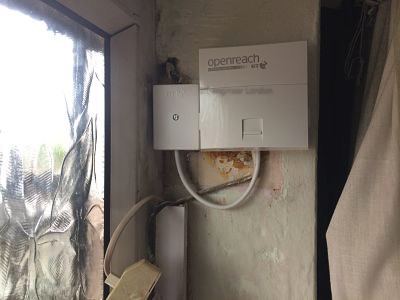
West London telephone engineer — covering W1 through to W14, plus Belgravia, Knightsbridge, Battersea, Kensington and the riverside districts. I've spent more time in west London than any other quarter, partly because the buildings are unforgiving and the clients expect a finish that doesn't show.
West London is where some of the trickiest installations live — listed buildings in Belgravia, period mansions in Holland Park, Edwardian flats above Marylebone shops. Old wiring routed up flue chases, around cornices, behind plaster that's been on the wall for a hundred years. Discreet finishes are non-negotiable. If a job needs a cable trunked across a Grade II drawing room, the answer is usually "we don't" — we find another route. Half the skill of working west is knowing how to get a fault fixed without the householder ever seeing where you've been.
The geography of the west London patch
West London is bigger and more varied than people imagine. From Marylebone and Mayfair in W1, west through Bayswater and Notting Hill (W2, W11), south to Kensington and Chelsea (W8, SW3, SW10), out to Holland Park and Shepherd's Bush (W11, W12, W14), north to Maida Vale and St John's Wood (W9, NW8), and across the river to Battersea, Putney, Fulham, Hammersmith and Chiswick. Add Belgravia, Knightsbridge, Pimlico and the bits of SW1 that sit west of Vauxhall Bridge Road, and you've got most of my regular work. The wiring history is layered: GPO underground from the 1920s and 30s, BT overhead drops added in the 60s and 70s, internal cabling redone in the 90s, fibre arriving in waves from about 2012 onward. Many properties show evidence of all four eras when you open the master socket.
Transport, parking and how I get to your door
Public transport in west London is excellent on paper and frustrating in practice. The Central, Piccadilly and District lines all run east-west, but cross-town hops (Marylebone to Battersea, say) tend to need a bus or a change. I use the Elizabeth line for anything between Paddington and Acton, the Bakerloo for Maida Vale and Kilburn, and I drive for anything south of the river or out towards Chiswick. Parking is the constant problem: Westminster, Kensington & Chelsea and Hammersmith & Fulham all run controlled zones with eye-watering visitor rates. If you have a residents' permit you can lend for half a day, that's the quickest start. Otherwise I'll factor in the meter and price the job knowing where I'll be parked.
By arrangement I'll work as far west as Ealing, Acton, Brentford and Kew, and as far south-west as Wandsworth, Earlsfield and Wimbledon Park. The very-west outer boroughs (Hounslow, Hayes) are doable but I'd prefer to slot them around other jobs in the area.
The buildings — and what each one demands
- Belgravia and Knightsbridge (SW1, SW3, SW7). Grade I and Grade II listed stucco-fronted terraces. The work has to be invisible. Master sockets are usually hidden behind a panel in the service area or tucked into a butler's pantry. New runs go through existing voids — never chase a plaster cornice. Often the chimney flues are the only viable vertical route between floors.
- Mayfair and Marylebone (W1). Mix of period mansions, mansion flats, and commercial offices above shops. Long shared risers, sometimes original cast-iron, with cabling stacked over a century of patches. The master socket might be three floors below where the broadband is needed.
- Notting Hill, Holland Park and Kensington (W2, W8, W11). Stucco terraces converted into flats. The classic problem is the lower-ground flat with the master in a damp side return and the broadband router in the kitchen at the back. Re-routing the line and fitting a properly tested NTE5C in a dry spot solves most complaints.
- Maida Vale, St John's Wood and Little Venice (W9, NW8). Edwardian mansion blocks, long corridors, generous voids above the entrance halls. WiFi requires planning because the rooms are large and the internal walls thick. Wired access points on Cat6 are the standard fix.
- Shepherd's Bush, Hammersmith and White City (W12, W6). Mixed terraces, ex-LCC estates, and the new BBC/White City Place developments. FTTP coverage is genuinely good around here now.
- Chelsea, Pimlico and Fulham (SW1, SW3, SW6, SW10). Smaller terraces, fewer voids, and the routine challenge of getting a Cat6 from the front room to the loft without leaving a visible trace.
- Battersea, Nine Elms and the new Embassy quarter. Modern blocks, fibre to the door, reinforced concrete walls — the WiFi work here is all about access-point placement and PoE-fed APs in the right ceiling positions.
- Chiswick and Ealing (W4, W5, W13). Edwardian semis, generous gardens, garden offices that need a proper wired link rather than a hopeful repeater.
Three jobs from the west London diary
Eaton Square, SW1. A first-floor drawing-room flat with broadband that crawled in the front (street-facing) rooms and was fine at the back. The master socket was in the back hall, perfectly clean. The router was in the front room, and the previous engineer had run an unshielded extension along the picture rail. With a listed property like this, chasing a new cable wasn't an option. We routed Cat6 from the hall, up through an existing void by the chimney breast, behind a re-fitted panel, and out into the front room where it terminated in a discreet brushed-brass faceplate. A small PoE access point on the ceiling rose finished the job. Full 802.11ax everywhere, no plaster disturbed, no skirting board lifted that wasn't going to be lifted anyway.
Lansdowne Crescent, W11. A converted stucco villa, three flats, and the top-floor tenant complained of a hissy line and broadband that kept dropping at 7pm every evening. I traced the fault to a buried scotchlok in the shared service cupboard on the half-landing — the joint had corroded and was making intermittent contact whenever someone walked past it. Replaced the joint with a gel-filled connector, re-terminated the run on a fresh NTE5C in the flat, and the line cleared instantly. The 7pm timing turned out to be the downstairs neighbour's daughter coming home and slamming the cupboard door.
King's Road, SW3. A small private members' club above a shop wanted hardwired ethernet at every table position in their first-floor dining room without a single visible cable. We ran six Cat6 drops through the floor void below, terminating in floor boxes set into the original parquet. Each box held a single RJ45 and a low-voltage USB charging port. Fluke-certified, patched into a new wall-mounted cabinet behind the bar, and finished in two evenings after service. The club manager said the next morning he couldn't see where we'd been — that's exactly the brief in west London.
What I bring, and why each piece of kit matters
- NTE5A and NTE5C master sockets, plus VDSL/FTTC faceplates and FTTP-compatible accessories
- CW1308 internal voice cable in white and ivory, plus screened variants for noisy environments
- Cat5e, Cat6 and Cat6a — solid and stranded, white, black and ivory jackets
- Fluke DSX cable certifier with Cat6 and Cat6a channel adapters
- Krone and IDC tools, gel-filled connectors for damp joints, scotchloks where appropriate
- A line tester for tip/ring, REIN and noise-margin readings
- UniFi, TP-Link Omada and BT/EE access points for 802.11ax mesh and wired AP installs
- Fibreglass and steel cable rods for routing through voids and conduits
- Brushed-brass, brushed-steel, white and ivory faceplates for finishes that match period interiors
West London exchanges and line types
W1 and W2 sit largely on Mayfair, Paddington and Western exchanges — short loops, generally good FTTC, increasing FTTP. W8 and W11 are Kensington and Holland Park — older infrastructure, some streets still on overhead drops. W9 and NW8 are Maida Vale and Hampstead — long loops in places, FTTP coverage uneven. W12 and W14 are Shepherd's Bush and West Kensington — newer cabinets, good VDSL, fibre rolling out. SW1, SW3, SW7 and SW10 are Westminster, Belgravia and Chelsea — short loops, very mixed building stock, FTTP increasing but constrained by listed-building restrictions in some streets.
Why ex-BT matters in west London especially
The neat trick with west London is that every other tradesperson has already been in the building before me. Decorators, electricians, AV installers, alarm engineers — the wiring you find inside the wall is rarely the wiring an Openreach engineer would have left. Having worked inside BT, I can recognise what's original (and how to keep it working), what's been added (and whether it's safe to leave), and what needs to come out before the line will ever be quiet. Most jobs here are about restoring a clean signal path between the outside drop and the customer's router — once that's done, broadband and WiFi behave themselves.
Listed buildings, planning constraints and the unwritten rules of west London
A surprising fraction of west London property is listed — Grade I, Grade II* and Grade II. Belgravia, Knightsbridge, Mayfair, Marylebone, parts of Kensington and the conservation areas of Notting Hill all contain large numbers of protected buildings. The unwritten rules I work to:
- No chasing of original plasterwork, cornicing, panelling or skirting in any listed building.
- No surface trunking visible from any principal room or corridor.
- Existing voids and routes only — chimney flues (where decommissioned), service ducts, hidden behind built-in joinery, under floorboards lifted at the joist line and replaced exactly.
- Faceplates to match existing electrical fittings — brushed brass in older houses, brushed steel or chrome in modern ones, ivory or white in plainer interiors.
- If in doubt, ask the householder's interior designer or architect before drilling. They will always have a view.
I've turned down jobs where the only viable cable route would have damaged a listed feature. There are always other options — they just take longer to think through. Honest advice up front saves everyone a problem later.
The commercial side — Mayfair, Marylebone and the City fringe
A substantial part of my west London work is small-to-medium commercial — family offices, boutique law firms, members' clubs, gallery offices, embassies. The common thread is that the wiring has to be clean, certified and properly documented. Cat6 or Cat6a is the standard for new installs, terminated on Cat6 keystones and patched into a labelled wall-mount or floor-mount cabinet. Every drop gets Fluke-certified with a full channel report — wire-map, length, attenuation, NEXT, FEXT, return loss — and the documentation pack is handed over with the invoice. WiFi is usually centrally-managed (UniFi or Omada) with PoE-fed APs on the ceilings, configured for proper SSID separation between guest, staff and management traffic.
The challenge with west London office buildings is the shared riser. Most Mayfair and Marylebone office blocks were converted from older buildings, with services stacked into a riser cupboard that may have been used by a dozen tenants over forty years. A clean install means identifying the live cables, abandoning the dead ones safely, and leaving the riser tidier than I found it.
FTTC, FTTP and the west London fibre rollout
Fibre coverage in west London has expanded enormously since 2020. Mayfair, Marylebone, Belgravia, Knightsbridge, Notting Hill, Holland Park, Kensington and Chelsea now have substantial FTTP availability, with new build-outs continuing. The newer riverside developments in Battersea and Nine Elms are FTTP from day one. Some of the older mansion blocks in W9, W11 and SW1 are slower to come online because of internal building constraints, but even there the picture is improving. If you ring with your address I can usually tell you within a minute or two what's available at your specific door — and whether it's worth waiting for FTTP if it's expected soon.
WiFi in west London homes — the recurring problems
Three things break WiFi in west London houses more often than anything else: thick walls, long rooms, and concrete floors. A six-bedroom Belgravia townhouse can be 35 metres deep with two 60cm-thick party walls. A mansion-flat lounge can be 12 metres long with a single router at one end. A Battersea Power Station flat has reinforced concrete floors that block vertical signal travel. None of these is solved by a better router — they're solved by getting access points to the right physical locations on properly-installed Cat6. A typical west London WiFi job runs from a quick site survey through to one to three PoE-fed APs on a small UniFi or Omada controller, configured with the right channels, transmit powers and SSID layout for the household.
Ring 020 3633 1131. Advice freely given.